15874196392
No. A6-608 Lugu International Industrial Park, Yuelu District, Changsha 410205, Hunan, P.R China
Matcha has become one of the most recognizable ingredients in modern food and beverage culture. From lattes and desserts to protein drinks and packaged snacks, its distinctive green color, earthy flavor, and strong cultural identity have helped it move from a traditional tea ingredient into a global food trend.
Now another green botanical ingredient is attracting attention: pandan.
Known for its fragrant aroma and naturally green appearance, pandan has been used for generations in Southeast Asian cuisines. It is particularly familiar in countries such as Thailand, Indonesia, Malaysia, the Philippines, Singapore, and Vietnam, where pandan leaves are used to flavor rice dishes, desserts, beverages, and traditional sweets.
As consumers increasingly look for distinctive flavors, recognizable plant ingredients, and visually appealing foods, pandan is moving beyond its traditional regional market.
This raises an interesting question:
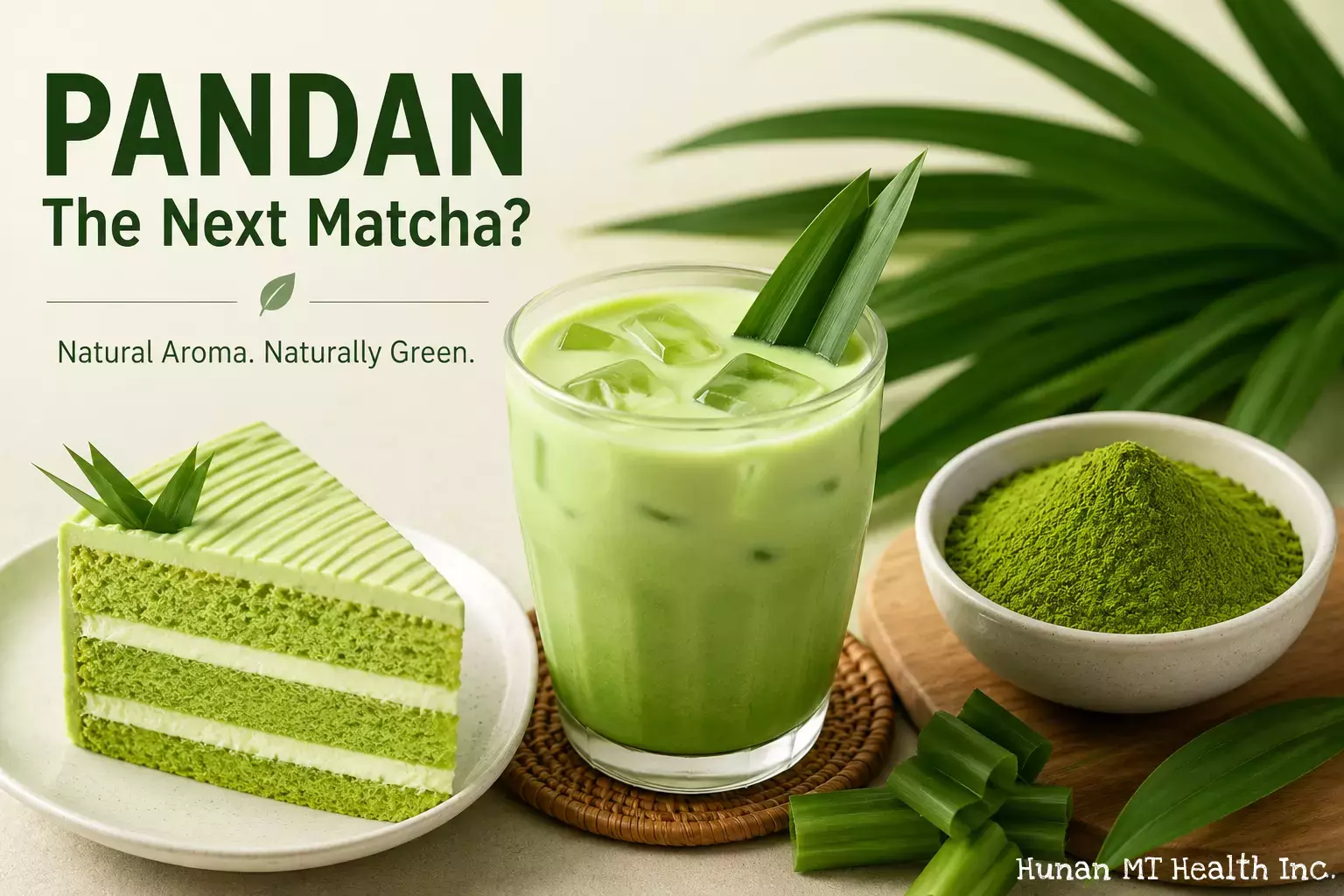
Is pandan the next matcha?
Pandan is unlikely to replace matcha in the same way that one global ingredient replaces another. Their flavors, cultural backgrounds, compositions, and traditional uses are different.
However, pandan has several characteristics that make it particularly interesting for modern food and beverage innovation.
It offers something that many manufacturers are looking for today: a recognizable botanical ingredient with a distinctive aroma, a natural green color, and strong potential across multiple product categories.
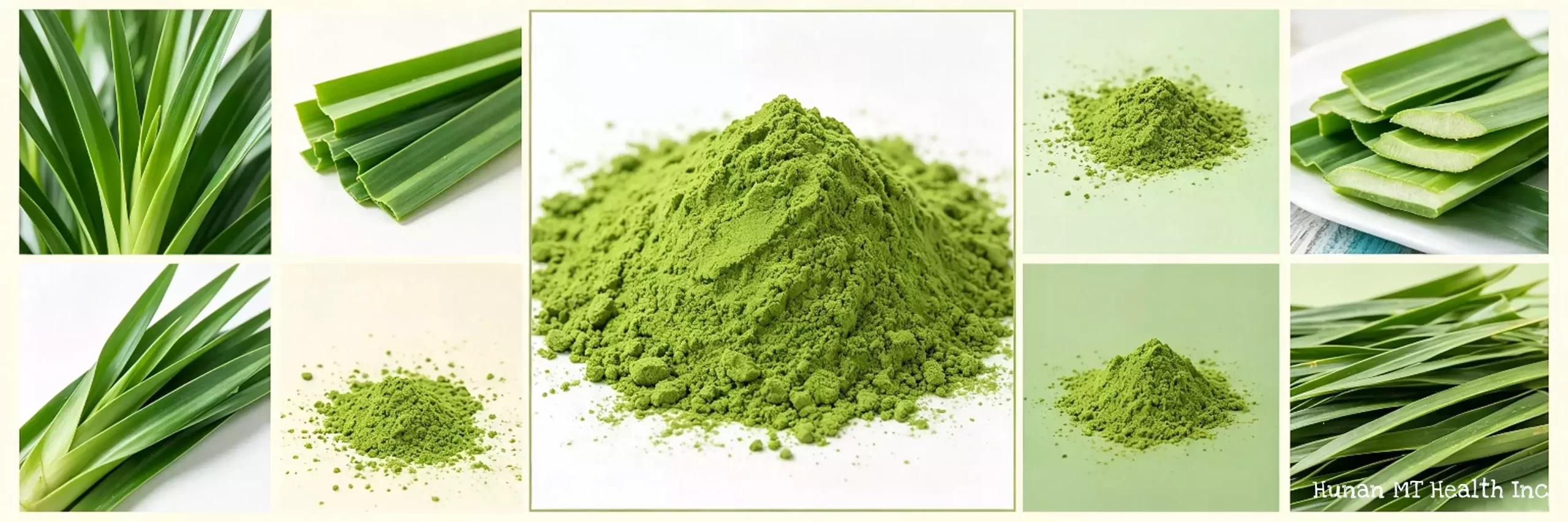
Pandan generally refers to plants from the Pandanus genus, particularly Pandanus amaryllifolius, which is widely used as an aromatic plant in Southeast Asian cuisine.
The long, narrow leaves are traditionally used fresh or processed into pastes, juices, extracts, or powders.
Fresh pandan leaves have a characteristic sweet, floral, grassy aroma. One of the compounds associated with its distinctive fragrance is 2-acetyl-1-pyrroline, which is also found in the aroma profile of certain fragrant rice varieties.
This aromatic character is one reason pandan stands out from conventional green ingredients.
Pandan is not simply “another green powder.”
It can contribute both color and flavor, depending on the processing method and concentration.
For food manufacturers, this combination creates interesting formulation opportunities.
Pandan itself is not new.
What is changing is the global visibility of Southeast Asian flavors.
Food culture has become increasingly international. Ingredients that were once strongly associated with a particular region can now become familiar to consumers around the world through restaurants, social media, travel, specialty cafés, and global food brands.
Pandan fits particularly well into this environment.
Several factors are contributing to its growing commercial interest.
Vanilla, chocolate, strawberry, and matcha remain major flavor categories.
But food developers constantly need new flavor concepts to differentiate products.
Pandan offers a profile that can be described as:
Sweet
Floral
Grassy
Nutty
Aromatic
Slightly vanilla-like
Its flavor is difficult to replicate with a single conventional flavor ingredient.
That makes it attractive for product developers looking for something distinctive.
Pandan has a strong connection to Southeast Asian culinary traditions.
It appears in products such as:
Pandan cakes
Pandan chiffon cake
Pandan rice
Pandan waffles
Traditional desserts
Coconut-based sweets
Rice-based desserts
Pandan beverages
As consumers become more familiar with Southeast Asian cuisine, pandan has an opportunity to move from a regional ingredient to a globally recognized flavor.
This is similar to the broader journey of other ingredients that moved from traditional culinary applications into international food culture.
The comparison is useful, but it needs to be understood correctly.
Pandan and matcha have several commercial similarities.
Both can:
Provide a recognizable green visual identity
Work in beverages and desserts
Connect products with Asian food culture
Generate strong visual content for social media
Be incorporated into powdered formulations
Support premium or specialty product positioning
Inspire new flavor combinations
But there is one major difference.
Matcha is primarily associated with tea. Pandan is primarily associated with aroma and flavor.
Matcha has a very specific preparation culture, especially in traditional Japanese tea.
Pandan is more flexible from a culinary perspective.
It can be paired with:
Coconut
Vanilla
Chocolate
Mango
Banana
Pineapple
Coffee
Rice
Dairy
Plant-based milk
This flexibility may be one of pandan’s biggest commercial advantages.
Rather than competing directly with matcha, pandan may become another Asian-origin flavor platform for food and beverage innovation.
| Feature | Pandan Powder | Matcha Powder |
|---|---|---|
| Botanical source | Pandanus species | Camellia sinensis |
| Main identity | Aromatic culinary ingredient | Powdered green tea |
| Flavor | Sweet, floral, grassy, aromatic | Umami, vegetal, slightly bitter |
| Traditional use | Southeast Asian foods and desserts | Japanese tea culture |
| Beverage applications | Lattes, smoothies, milk drinks | Matcha tea, lattes, smoothies |
| Dessert applications | Cakes, puddings, ice cream, cookies | Cakes, cookies, ice cream |
| Color contribution | Naturally green, depending on raw material and processing | Characteristic green |
| Key commercial attraction | Distinctive aroma + color | Tea identity + flavor + color |
The comparison shows why pandan should not simply be marketed as “another matcha.”
Its strongest selling point is different.
Matcha brings tea culture. Pandan brings aroma, flavor, color, and Southeast Asian culinary identity.
Pandan powder is produced by processing pandan leaves into a dried, powdered ingredient.
A typical production process may involve:
Fresh pandan leaves → cleaning → cutting → drying → milling → sieving → packaging
Processing conditions matter because pandan contains aromatic compounds as well as natural pigments.
Excessive heat, prolonged processing, oxygen exposure, and unsuitable storage conditions can influence the sensory and visual characteristics of plant powders.
For commercial buyers, the exact manufacturing process should therefore be evaluated alongside the product specification.
A good pandan powder should have a consistent:
Color
Aroma
Particle size
Moisture level
Microbiological profile
Batch-to-batch quality
Manufacturers should also establish specifications appropriate to their intended application.
One of the most promising opportunities for pandan is the beverage industry.
Consumers are already familiar with green beverage concepts through matcha, pistachio, mint, avocado, and other plant-based ingredients.
Pandan can enter this category from a different direction.
Pandan Latte
A pandan latte can combine pandan’s aromatic profile with:
Dairy milk
Oat milk
Coconut milk
Almond milk
Other plant-based milk
The combination of pandan and coconut is particularly natural from a Southeast Asian culinary perspective.
Pandan Smoothies
Pandan powder can be incorporated into smoothies with fruits such as:
Banana
Mango
Pineapple
Coconut
Avocado
These combinations allow product developers to build tropical flavor profiles.
Pandan Milk Drinks
Pandan can also be incorporated into flavored milk and plant-based beverages.
For manufacturers, powdered ingredients can simplify handling compared with fresh leaves, particularly when year-round supply and standardized dosing are required.
Pandan and Coconut: A Particularly Strong Flavor Pairing
One reason pandan has commercial potential is its compatibility with coconut.
The two ingredients are deeply connected in Southeast Asian food traditions.
Coconut contributes:
Creaminess
Mild sweetness
Fat richness
Tropical character
Pandan contributes:
Floral aroma
Sweet herbal notes
Green visual identity
Together, they can create a recognizable flavor direction without requiring an overly complicated ingredient list.
This combination can work in:
Coconut-pandan drinks
Ice cream
Cakes
Puddings
Custards
Cookies
Dessert sauces
Plant-based desserts
For food manufacturers, familiar ingredient combinations can also make new flavors easier for consumers to understand.
Bakery is another natural application for pandan.
Pandan chiffon cake is already well established in Southeast Asian food culture, and its popularity provides a strong reference point for international product developers.
Pandan powder can be explored in:
Sponge cakes
Chiffon cakes
Cookies
Muffins
Waffles
Pancakes
Pastries
Bread
Cake fillings
The ingredient can provide both flavor and color, although the exact color intensity depends on the raw material and processing conditions.
For industrial bakery manufacturers, powder formats can also be easier to weigh, store, transport, and incorporate than fresh leaves.
Pandan is particularly interesting for frozen desserts because its sweet aromatic profile pairs well with creamy bases.
Potential applications include:
Pandan ice cream
Pandan gelato
Coconut-pandan ice cream
Pandan soft serve
Pandan popsicles
Pandan frozen yogurt
Pandan dessert toppings
Combining pandan with coconut, vanilla, chocolate, or tropical fruit can create a more sophisticated flavor profile.
This is especially relevant for manufacturers developing limited-edition or seasonal flavors.
One of pandan’s most visually attractive characteristics is its naturally green appearance.
However, manufacturers should be precise when describing it.
Pandan powder is a botanical food ingredient, not necessarily a standardized natural color additive in every market.
Whether a pandan ingredient can legally be used specifically as a “coloring” depends on the jurisdiction, product category, processing method, and regulatory status of the particular ingredient.
This distinction matters for international B2B buyers.
If the goal is to develop a product marketed specifically around a natural green color, manufacturers should confirm the regulatory requirements in their target market.
Pandan can contribute green color, but it should not automatically be treated as a universal substitute for standardized food colorants.
From a B2B perspective, pandan powder offers several practical advantages.
Convenient Handling
Fresh pandan leaves are perishable and require refrigeration or rapid processing.
Powdered pandan is easier to:
Store
Transport
Weigh
Dose
Blend
Standardize
This can simplify manufacturing logistics.
Consistent Ingredient Format
Powder provides manufacturers with a more convenient format for recipe development.
Instead of processing fresh leaves for every production batch, manufacturers can incorporate a measured quantity of powder into a formulation.
Multiple Applications
The same ingredient can potentially be used across different categories.
This makes pandan interesting for companies with multiple product lines.
Strong Flavor Identity
Pandan is not simply a generic “green flavor.”
Its distinctive aroma can become part of the product identity.
Looking at current food-development opportunities, several categories stand out.
1. Café and Beverage Products
Pandan latte
Coconut-pandan latte
Pandan smoothie
Pandan milk tea
Pandan plant-based drinks
2. Bakery
Pandan chiffon cake
Pandan cookies
Pandan waffles
Pandan muffins
Pandan pastries
3. Frozen Desserts
Pandan ice cream
Pandan gelato
Coconut-pandan frozen desserts
4. Confectionery
Pandan candies
Pandan fillings
Pandan chocolate
Pandan dessert coatings
5. Instant Food Products
Dessert mixes
Beverage powders
Pancake mixes
Cake mixes
6. Foodservice Ingredients
Pandan powder can also be supplied as an ingredient for restaurants, bakeries, cafés, and dessert manufacturers.
The growing popularity of pandan also means buyers need to distinguish between products designed for different applications.
Before purchasing bulk pandan powder, consider the following factors.
Botanical Identity
Confirm the botanical source and plant material used.
Color
Ask for information about typical color characteristics and batch consistency.
Aroma
Pandan’s aroma is one of its main commercial characteristics, so sensory evaluation can be valuable.
Particle Size
Particle size can influence dispersion, texture, and processing performance.
Moisture
Moisture control is important for powder stability and handling.
Microbiological Quality
Food manufacturers should ensure that the ingredient meets the microbiological requirements of the intended market.
Heavy Metals and Other Contaminants
Testing should be appropriate for the raw material and destination market.
Packaging
Pandan powder should be packaged appropriately to protect the ingredient from moisture and environmental exposure.
Documentation
Professional B2B buyers may request:
Product specification
Certificate of Analysis
Microbiological testing
Heavy-metal testing
Allergen information
Country of origin
Shelf-life information
Relevant certifications
Calling pandan “the next matcha” creates an attractive headline, but the bigger opportunity is more nuanced.
Pandan does not need to become another matcha to succeed.
Matcha has established a powerful global position because of its unique combination of tea culture, flavor, color, preparation rituals, and consumer recognition.
Pandan has a different proposition.
Its opportunity comes from the intersection of:
Southeast Asian culinary heritage + distinctive aroma + natural green appearance + modern product innovation.
That combination can be highly valuable.
Instead of competing directly with matcha, pandan can create a new flavor category.
This may be particularly attractive for brands that want to offer something consumers have seen less frequently than another matcha latte.
For food and beverage brands, successful pandan products will likely need more than simply adding pandan powder to an existing recipe.
A stronger approach is to build a complete flavor story.
For example:
Pandan + Coconut
A tropical Southeast Asian-inspired profile.
Pandan + Vanilla
A softer and more familiar aromatic profile.
Pandan + Chocolate
A richer dessert-oriented combination.
Pandan + Mango
A tropical fruit-forward concept.
Pandan + Coffee
A more adventurous café-style flavor.
These combinations give product developers room to create distinctive SKUs without making pandan feel unfamiliar.
For ingredient distributors and food manufacturers, emerging flavors create opportunities beyond consumer trends.
A successful ingredient needs to be commercially practical.
That means buyers need to consider:
Supply → consistency → specifications → processing → formulation → regulatory requirements → consumer appeal.
Pandan has a useful advantage because it can serve several roles in a formulation.
It can be a:
Flavor ingredient
Botanical ingredient
Green visual ingredient
Cultural storytelling ingredient
Premium flavor concept
This multifunctionality can make it attractive for product innovation.
At Hunan MT Health, we supply plant-based powders and botanical ingredients for international B2B customers.
Our Pandan Powder is suitable for manufacturers, distributors, foodservice companies, and product developers exploring Southeast Asian-inspired food and beverage concepts.
Pandan powder can be considered for applications including:
Beverages
Milk drinks
Plant-based drinks
Smoothies
Bakery
Cakes
Ice cream
Desserts
Instant mixes
Confectionery
For B2B customers, we can discuss product specifications, samples, packaging, MOQ, COA, and bulk supply requirements according to the intended application.
The right specification depends on how the ingredient will be used.
A beverage manufacturer may focus on dispersion and sensory performance.
A bakery manufacturer may prioritize aroma, color, particle size, and consistency.
A distributor may place greater emphasis on documentation, packaging, shelf life, and supply reliability.
This is why ingredient selection should begin with the finished product, rather than simply choosing a trending ingredient.
Is pandan the next matcha?
Pandan has the potential to become a globally recognized flavor trend, but it is unlikely to simply replace matcha. The two ingredients have different botanical identities, flavors, traditions, and applications. Pandan’s strongest opportunity is as a distinctive Southeast Asian-inspired flavor and botanical ingredient.
What does pandan powder taste like?
Pandan is known for a sweet, floral, grassy, and aromatic flavor. Its aroma is sometimes compared with fragrant rice or mild vanilla-like notes, although pandan has its own distinctive sensory profile.
What is pandan powder used for?
Pandan powder can be used in beverages, cakes, cookies, waffles, ice cream, desserts, confectionery, instant mixes, and other food applications.
Can pandan powder be used as a natural green color?
Pandan powder can contribute a naturally green appearance, but regulatory treatment varies by market and application. Manufacturers should verify whether the specific pandan ingredient is permitted for use as a color additive or coloring ingredient in the target market.
Is pandan powder suitable for beverages?
It can be used in certain beverage formulations, including smoothies, milk drinks, plant-based beverages, and pandan-inspired lattes. Formulation testing is recommended to evaluate dispersion, flavor, color, and stability.
What pairs well with pandan?
Pandan pairs particularly well with coconut, vanilla, chocolate, mango, banana, pineapple, rice, and coffee.
The most interesting question may not be:
“Will pandan replace matcha?”
A better question is:
“Can pandan become the next globally recognized botanical flavor?”
There are reasons to believe it has potential.
Pandan combines a distinctive aroma with a naturally green appearance and deep culinary roots in Southeast Asia. It fits well into modern categories such as specialty beverages, plant-based drinks, bakery, ice cream, desserts, and instant food mixes.
For manufacturers, it also offers something increasingly valuable: a flavor that feels familiar enough to use, but different enough to stand out.
That is exactly the kind of balance that can drive food innovation.
Matcha has already built a global category.
Pandan may have the opportunity to build its own.
For brands and ingredient buyers looking for the next distinctive flavor concept, Pandan Powder is worth watching—not because it is another matcha, but because it offers a different story.
Explore Pandan Powder for Your Next Product
Hunan MT Health provides Pandan Powder and a broad range of botanical and plant-based ingredients for international B2B customers.
If you are developing a new beverage, bakery product, dessert, instant mix, or Southeast Asian-inspired food concept, contact our team to discuss your ingredient requirements.
We can provide samples, product specifications, COA, packaging options, MOQ information, and bulk quotations for your project.
The next big food trend may not look like the last one. Sometimes, innovation starts with an ingredient that has been part of a traditional food culture for generations. Pandan may be one of those ingredients.
15874196392
No. A6-608 Lugu International Industrial Park, Yuelu District, Changsha 410205, Hunan, P.R China



 JA
JA  EN
EN  FR
FR  DE
DE  ES
ES  RU
RU  TH
TH  KO
KO  AR
AR  PT
PT  ZH
ZH