15874196392
No. A6-608 Lugu International Industrial Park, Yuelu District, Changsha 410205, Hunan, P.R China
For modern food, beverage, nutraceutical, and personal care manufacturers, saffron extract offers more than a traditional botanical story. Its value comes from the combination of natural coloring potential, sensory characteristics, and bioactive compounds.
However, not all saffron ingredients are the same. Whole saffron, saffron powder, aqueous extracts, and standardized saffron extracts can differ substantially in composition, concentration, color strength, aroma profile, and intended application. For B2B buyers, understanding these differences is essential when selecting the right raw material.
This article explains what saffron extract contains, its potential benefits, major commercial applications, and the specifications manufacturers should consider before purchasing.
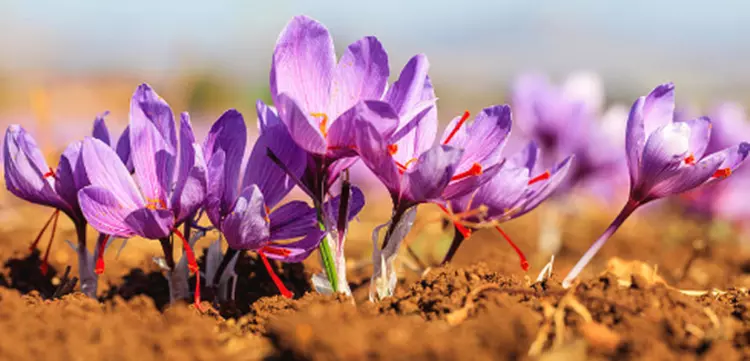
Saffron’s characteristic properties are associated with several important compounds.
Crocins are water-soluble carotenoid compounds associated with saffron’s distinctive yellow to orange-red coloration.
They are particularly important for manufacturers developing products where both botanical positioning and natural visual appeal are relevant.
Potential applications include:
Color performance can vary according to concentration, formulation conditions, processing temperature, light exposure, storage, and the composition of the final product.
Picrocrocin is one of the compounds associated with saffron’s characteristic bitter taste.
For food developers, this is important because saffron extract is not simply a coloring ingredient. Its sensory contribution must also be considered during formulation.
The appropriate dosage depends on factors including:
A higher concentration is not always the better commercial choice. In many formulations, the goal is to balance color, flavor, aroma, and cost-in-use.
Safranal is an important volatile compound associated with saffron’s distinctive aroma.
Its concentration and retention can be affected by:
For applications where aroma is important, manufacturers should consider whether the selected saffron extract is designed primarily for color, sensory performance, or a broader phytochemical profile.
Saffron also contains additional naturally occurring compounds, including carotenoid-related substances and other phytochemicals.
The exact composition of a commercial extract should be confirmed through appropriate analytical documentation. Buyers should avoid assuming that every saffron extract contains identical concentrations of crocins, picrocrocin, safranal, or other constituents.
Saffron has attracted significant scientific interest because of its phytochemical composition. Its potential biological effects are being studied, particularly in relation to antioxidant activity and other areas of health research.
It is important to distinguish between research findings, ingredient properties, and permitted finished-product health claims. The ability to make a claim depends on the applicable regulations in the target market.
Saffron contains compounds with antioxidant activity, including crocin-related carotenoids and other phytochemicals.
For B2B formulators, this makes saffron extract relevant to product concepts focused on:
The antioxidant properties of an ingredient should not automatically be translated into disease-prevention or therapeutic claims.
One of saffron extract’s strongest commercial advantages is its premium market identity.
Saffron is internationally recognized as a high-value botanical ingredient. This can support the development of products positioned around:
This positioning can be particularly valuable in crowded food and wellness categories where manufacturers need ingredients that help create a clear product story.
For some formulations, saffron extract can provide multiple functions simultaneously, including:
This multi-functionality can simplify ingredient concepts compared with using separate ingredients solely for color and botanical identity.
In the United States, saffron is listed by the FDA as a color additive exempt from certification for food use, subject to the applicable identity, specification, and regulatory requirements. Requirements can differ by country and application, so manufacturers should verify the regulatory status and permitted use conditions in their target market.
Saffron has a long history of use in culinary applications, and extract formats can provide manufacturers with a more convenient option for standardized industrial formulation.
Potential applications include:
Product developers should conduct application trials because saffron’s color and sensory profile may change under different processing conditions.
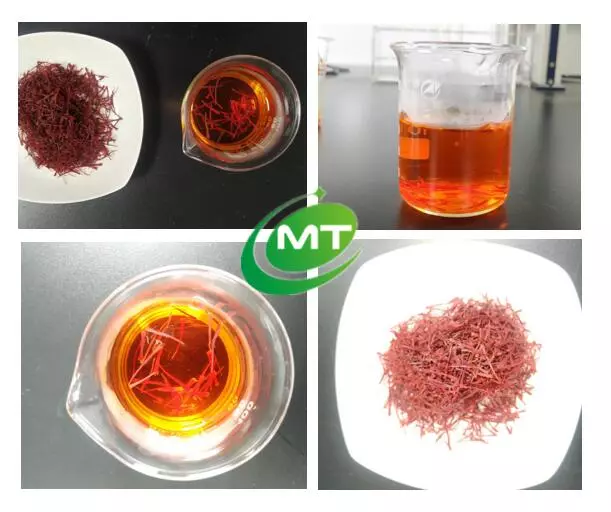
Saffron extract can be incorporated into selected beverage concepts, including:
For beverage development, important technical factors include solubility, dosage, pH, heat treatment, color stability, and compatibility with other ingredients.
Standardized saffron extracts may be used as botanical ingredients in dietary supplement formulations, depending on product design and applicable market regulations.
Potential formats include:
For supplement manufacturers, the most important purchasing factors typically include botanical identity, active-compound specifications, analytical methods, contaminant controls, and batch-to-batch consistency.
Saffron can also support premium product development across several emerging categories:
The ingredient can contribute to a product’s story, but marketing claims should always be reviewed for compliance in the intended market.
There is no single universal specification suitable for every saffron extract application. The right specification depends on whether the product is intended primarily for color, aroma, botanical supplementation, or multi-functional formulation.
When sourcing saffron extract, B2B buyers may consider the following parameters.
| Specification | Why It Matters |
|---|---|
| Botanical source | Confirms the material is derived from Crocus sativus L. |
| Plant part | Defines whether stigmas or another specified botanical material are used |
| Appearance | Helps establish physical product consistency |
| Active markers | May include specification for crocin-related compounds or other defined markers |
| Extraction ratio | Provides information about the relationship between raw material and extract where applicable |
| Particle size | Important for powder processing and blending |
| Moisture | Relevant to powder stability and storage |
| Solubility | Important for beverage and instant formulations |
| Microbiological limits | Important for food and supplement quality control |
| Heavy metals | Supports contaminant-control requirements |
| Pesticide residues | May be relevant depending on the target market and customer requirements |
| Residual solvents | Relevant when solvent extraction is used |
| Packaging | Helps protect the ingredient from moisture, oxygen, and light |
Actual specifications should be confirmed in the supplier’s current specification sheet and certificate of analysis (COA).
Saffron is a high-value raw material, so purchasing decisions should not be based solely on price.
A professional sourcing process should consider:
Confirm the scientific name and declared plant material.
Where relevant, establish clear analytical specifications for the markers required by the finished product.
Because saffron is a premium ingredient, authenticity and supplier quality-control systems are particularly important.
Consistent color and active-compound performance can be critical for large-scale manufacturing.
An extract that performs well in a capsule may not be the best choice for a heat-processed beverage or bakery product.
Natural origin does not remove the need for regulatory evaluation. Ingredient classification, permitted uses, specifications, labeling, and claims should be checked for each target market.
Before purchasing, ask four practical questions:
Do you need saffron mainly for:
This decision should guide the extract specification.
Different formats require different technical characteristics.
For example:
Depending on the project, buyers may request:
Regulatory requirements vary. A specification suitable for one country or application should not automatically be assumed suitable for another.
At Hunan MT Health, we understand that B2B ingredient buyers need more than a product name and a price quotation.
For saffron extract projects, we can support customers with a focus on:
Whether you are developing a premium botanical supplement, a functional beverage, a saffron-colored food product, or a customized wellness formulation, selecting the right specification is critical to product performance.
We encourage buyers to discuss their intended application, target market, required dosage, technical requirements, and documentation needs before finalizing a purchase specification.
Saffron extract is typically produced from the stigmas of Crocus sativus L. The processing and extraction method determine the composition and characteristics of the final extract.
Important saffron compounds include crocins, which are strongly associated with its color; picrocrocin, associated with its characteristic taste; and safranal, an important aroma-related compound.
Saffron can impart a yellow-to-orange color and has established food uses. The regulatory requirements for using saffron or saffron-derived materials specifically for coloring should be checked in the target market. In the United States, saffron is listed for food use as a color additive exempt from certification, with applicable regulatory requirements still applying.
Key factors include botanical identity, defined active markers where relevant, extraction method, color and sensory requirements, contaminant controls, analytical documentation, batch consistency, packaging, and suitability for the intended application.
Not necessarily. The best specification depends on the final product. A highly concentrated extract may not be the most cost-effective or technically suitable option for every food, beverage, or supplement formulation.
Saffron extract is a versatile premium botanical ingredient whose value extends beyond a single benefit or application. Its distinctive composition—including crocin-related color compounds, picrocrocin, and safranal—makes it relevant to food, beverage, dietary supplement, and premium botanical product development.
For manufacturers, the key question is not simply “What is saffron extract good for?” but rather:
Which saffron extract specification is right for my application?
The answer depends on the desired function, target market, active-compound requirements, processing conditions, and regulatory framework.
If you are looking for a reliable saffron extract supplier for bulk purchasing or customized B2B requirements, contact Hunan MT Health to discuss your application and request product specifications, a COA, technical information, samples, or a quotation.
Hunan MT Health — Your Botanical Ingredient Partner for Food, Beverage, and Nutraceutical Innovation.
15874196392
No. A6-608 Lugu International Industrial Park, Yuelu District, Changsha 410205, Hunan, P.R China



 JA
JA  EN
EN  FR
FR  DE
DE  ES
ES  RU
RU  TH
TH  KO
KO  AR
AR  PT
PT  ZH
ZH