15874196392
No. A6-608 Lugu International Industrial Park, Yuelu District, Changsha 410205, Hunan, P.R China
Walk into a specialty café in London, browse a dessert menu in Los Angeles, or scroll through food content on social media, and you may notice something unusual: purple is everywhere.
That purple color increasingly belongs to ube, the Filipino purple yam known botanically as Dioscorea alata.
Once primarily associated with Filipino desserts, ube has moved into mainstream food and beverage innovation. Ube lattes, ice cream, cakes, cookies, pastries, bubble tea, pancakes and other products are appearing in markets far beyond Southeast Asia.
The trend is no longer limited to independent Asian cafés. Major coffee and food brands have also begun experimenting with ube products. In the UK, for example, Starbucks and Costa introduced ube beverages in 2026, while other café brands had already tested ube products. Food-industry publications have described ube as a potential successor to the global matcha trend.
So, why is ube powder trending worldwide?
The answer is not simply its purple color.
Ube brings together several characteristics that modern food manufacturers increasingly value: distinctive visual identity, a recognizable yet unusual flavor, cultural storytelling, application versatility, and a convenient powdered format.
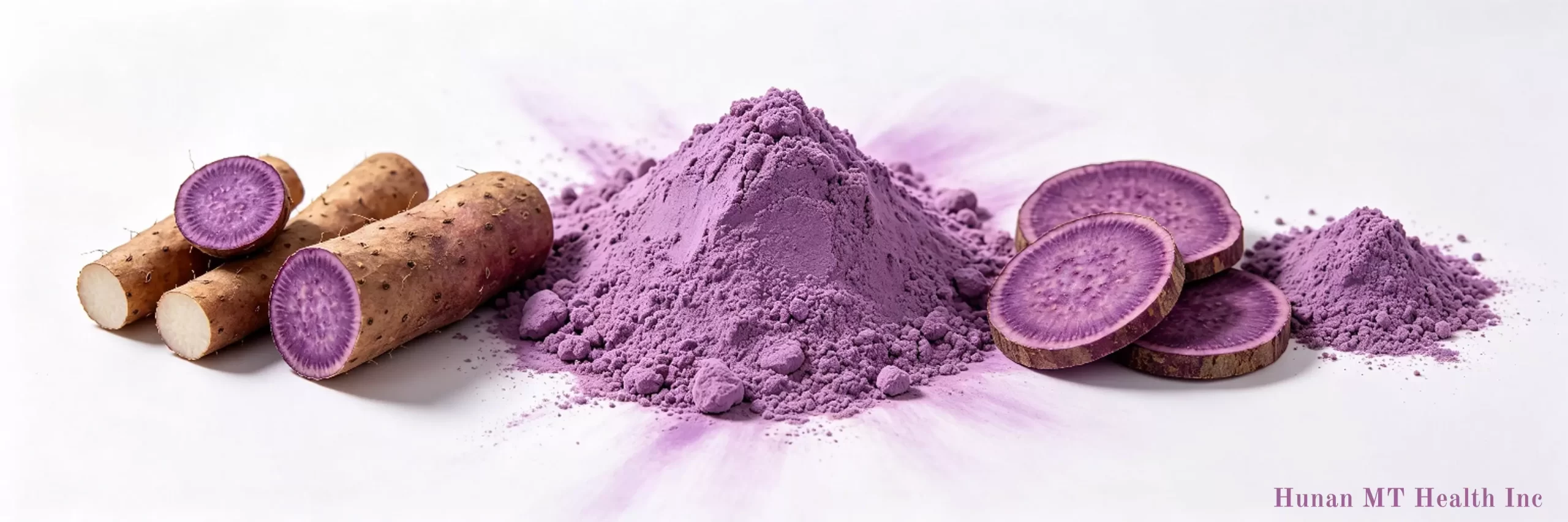
Ube is a purple yam, scientifically known as Dioscorea alata.
It has long been an important ingredient in Filipino cuisine, particularly in desserts such as ube halaya, ice cream and halo-halo. Its flavor is commonly described as mildly sweet, earthy, nutty and sometimes vanilla-like.
One important point for food manufacturers is that ube is not the same ingredient as taro or purple sweet potato.
Although these ingredients can all produce purple-colored foods, they come from different plants and have different flavor and formulation characteristics.
This distinction matters when developing a commercial product because consumers may associate all purple foods with “ube,” while technically they are very different ingredients.
The first reason for ube’s global popularity is obvious:
It looks different.
Food and beverage discovery has become increasingly visual. Consumers often encounter new products through photographs, short videos, social media posts, and digital menus before they ever taste them.
A naturally purple ingredient has an immediate advantage.
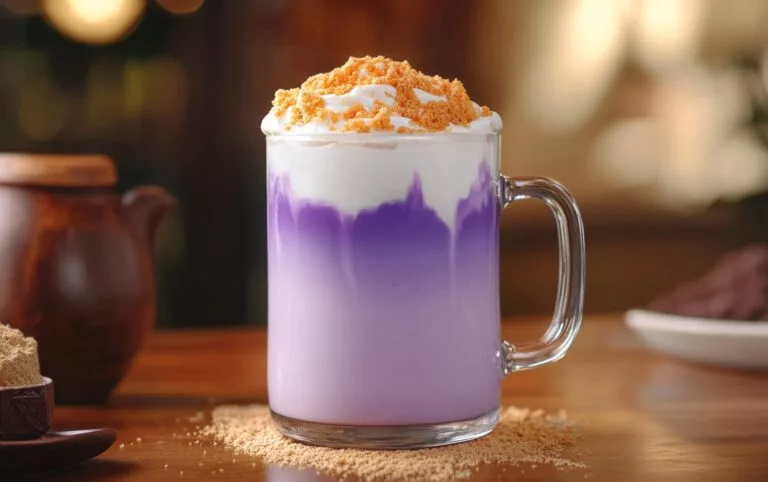
An ube latte can look different from a traditional latte.
An ube ice cream can stand out next to vanilla, chocolate, and strawberry.
An ube cake can become the visual focus of a dessert display.
This matters because the food industry increasingly competes not only for taste, but also for attention.
Recent beverage-industry coverage specifically identifies ube’s vibrant purple color as a major driver of its emergence in global drink innovation.
In other words:
Ube can make a product recognizable before the consumer even tastes it.
That is a valuable characteristic for modern food brands.
Visual appeal may encourage the first purchase, but appearance alone cannot sustain a food trend.
Consumers still need a reason to come back.
This is where ube has another advantage.
Ube has a relatively approachable flavor profile. It is generally perceived as mildly sweet, creamy, nutty and earthy, with descriptions sometimes comparing its aroma to vanilla.
This makes it different from highly acidic fruit flavors or strongly bitter botanical ingredients.
Ube can work with familiar flavor partners such as:
Vanilla
Coconut
Milk
Chocolate
Coffee
Matcha
White chocolate
Nuts
This creates an interesting product-development opportunity.
Consumers can experience something new without being confronted with an extremely unfamiliar flavor.
Ube’s popularity should not be reduced to a social-media phenomenon.
The ingredient has deep roots in Filipino food culture.
For generations, ube has been used in Filipino desserts and traditional preparations. Its movement into international markets represents the globalization of an ingredient that already had a strong culinary identity.
This gives ube something that many newly invented flavors do not have:
a real food story.
For modern brands, that story can be part of product positioning.
Instead of introducing another generic “purple berry” flavor, a manufacturer can introduce a product based on a recognizable ingredient with Filipino culinary heritage.
Recent reporting has also highlighted how the international popularity of ube is increasing awareness of Filipino cuisine and ingredients.
For responsible food marketing, however, brands should present ube’s cultural background accurately rather than treating Filipino heritage simply as a marketing decoration.
One of the clearest signs of a food trend becoming commercially significant is when large foodservice brands begin testing or launching it.
That is already happening with ube.
In 2026, Starbucks expanded its ube beverage activity into European markets, while Costa introduced ube drinks in the UK. Beverage-industry reporting also identified ube as an important flavor in 2026 beverage innovation.
At the same time, ube has been appearing in:
Cafés
Bakeries
Ice cream shops
Bubble tea stores
Dessert brands
Specialty food retailers
Foodservice menus
This transition is important.
A niche ingredient becomes commercially interesting when manufacturers can transform it into repeatable products that work across multiple markets and formats.
Ube is increasingly entering that stage.
Fresh ube can be difficult for international manufacturers to handle.
It is an agricultural product with challenges related to:
Seasonality
Transportation
Storage
Processing
Raw-material consistency
Powder provides another route.
Ube powder converts a relatively perishable agricultural ingredient into a more convenient dry ingredient format.
Depending on the specification and manufacturing process, powdered ube can be easier to:
Transport
Store
Weigh
Blend
Incorporate into dry mixes
Standardize in formulations
This is particularly valuable for B2B food manufacturers.
A café may be able to work with frozen or prepared ube.
A large-scale manufacturer producing an instant beverage mix, bakery premix, or dessert ingredient may prefer a powdered format that fits its existing production system.
This is one reason the rise of ube is also an opportunity for ingredient suppliers, not just cafés.
Historically, ube has been strongly associated with sweet foods.
That remains its largest commercial opportunity.
But today’s product developers are expanding its role.
Ube Beverages
Ube powder can be explored in:
Ube lattes
Ube milk drinks
Ube bubble tea
Smoothies
Specialty beverages
Instant beverage mixes
The combination of creamy flavor and purple appearance makes ube particularly suitable for café-style drinks.
Ube Bakery
Ube can be incorporated into:
Cakes
Cookies
Bread
Muffins
Pancakes
Waffles
Pastries
For bakery brands, ube provides both flavor and product differentiation.
Ube Ice Cream and Frozen Desserts
Ube has a long association with ice cream and other Filipino desserts.
Its flavor profile works naturally with creamy bases, while its color gives frozen products a distinctive appearance.
Potential applications include:
Ice cream
Frozen yogurt
Gelato
Sorbet-style products
Dessert mixes
Ube Confectionery
Manufacturers can also explore ube in:
Chocolate
Filled confectionery
Cookies
Snack products
Dessert fillings
This creates opportunities to combine ube with established flavors such as white chocolate, coconut and vanilla.
The comparison between ube and matcha is becoming increasingly common.
There is a logical reason for this.
Matcha demonstrated how a culturally specific ingredient can become a global café phenomenon when it combines:
Distinctive appearance + recognizable flavor + cultural story + beverage versatility.
Ube has several similar characteristics.
However, ube should not simply be marketed as “the next matcha.”
That comparison can help explain the trend, but ube has its own identity.
Matcha is a powdered tea with a characteristic vegetal and umami profile.
Ube is a starchy purple yam with a different flavor and culinary function.
The more interesting opportunity is not to replace matcha, but to create another globally recognizable ingredient category.
Industry coverage in 2026 increasingly reflects this possibility, with ube being described as a rapidly growing global food and beverage trend.
Modern consumers are increasingly exposed to thousands of food products.
For a new product to gain attention, brands often need a clear point of differentiation.
Ube provides one immediately:
Purple.
But the visual advantage goes beyond color.
Ube can help create:
Purple lattes
Purple ice cream
Purple cakes
Purple cookies
Purple pancakes
Purple smoothies
Purple desserts
This makes it highly suitable for social-media-friendly product launches.
However, manufacturers should distinguish between natural ube color and products that rely on additional coloring ingredients.
The exact shade of a finished product depends on the ube raw material, processing conditions, formulation, concentration, and other ingredients.
A high-quality ube powder does not necessarily need to be the brightest purple.
For commercial applications, consistent performance is more important than visual intensity alone.
One potential mistake is to treat ube purely as a natural purple coloring ingredient.
Ube is fundamentally a food ingredient with its own flavor, texture, and nutritional composition.
Its purple color comes from naturally occurring pigments, including anthocyanin compounds, although the exact pigment profile and concentration depend on the variety and processing conditions.
Current industry commentary has noted that many ube product launches focus primarily on color, while the ingredient’s broader characteristics remain less fully utilized.
For manufacturers, this suggests a wider opportunity:
Use ube for flavor + color + product identity, rather than relying on it for appearance alone.
That can create a stronger product concept.
The current ube trend is not limited to one country.
Recent coverage has documented growing interest across:
United States
United Kingdom
Europe
South Korea
India
Other international markets
European media have reported growing interest in ube for coffee, cakes and ice cream, while international food-industry publications have identified ube as an emerging ingredient in beverage innovation.
At the same time, rising demand has created supply challenges.
Industry reporting in 2026 has highlighted pressure on ube supply and increasing demand for commercially processed formats such as powders, purées, extracts and concentrates.
This creates both an opportunity and a warning for B2B buyers:
As demand grows, supplier quality and supply-chain reliability become increasingly important.
If ube is becoming a mainstream ingredient, selecting the right powder becomes increasingly important.
B2B buyers should evaluate several factors.
Confirm that the ingredient is actually derived from Dioscorea alata when authentic ube is required.
Do not assume that every purple powder labeled “ube” comes from the same botanical source.
Ask whether the product is:
Pure ube powder
Ube extract
Ube-based beverage mix
Dehydrated Ube Powder with a carrier
Ube powder blended with sweeteners or other ingredients
The intended application will determine which format is most appropriate.
Evaluate the powder in the finished product rather than judging only the dry powder.
Request a sample and test the characteristic ube profile in the actual formulation.
For beverage and instant powder applications, physical properties can affect mixing and final product performance.
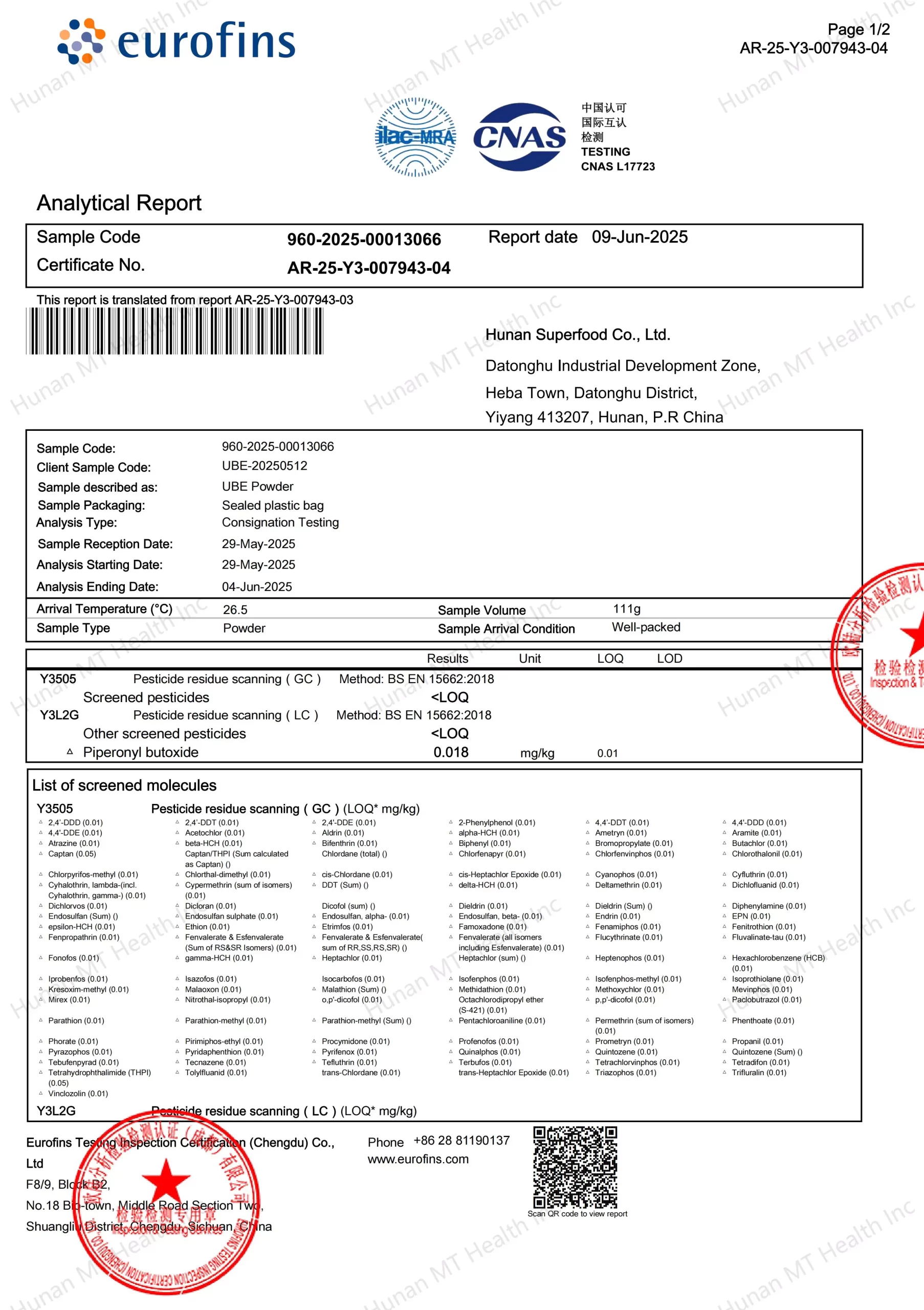
Commercial buyers should review appropriate:
Microbiological parameters
Moisture
Heavy metals
Pesticide residue requirements
Other market-specific specifications
The exact requirements should be determined according to the destination market and finished product.
At Hunan MT Health, Ube Powder is one of our core product categories.
We work with B2B customers looking to incorporate purple yam into modern food and beverage products.
Our Organic Ube can be explored for applications including:
Ube lattes
Bubble tea
Smoothies
Instant beverages
Ice cream
Cakes
Cookies
Bread
Pancakes
Waffles
Dessert products
Food premixes
For commercial projects, buyers can discuss:
Product specifications · Samples · COA · Packaging · Particle size · Application requirements · Bulk supply
Our focus is to help customers select an ingredient specification that matches the requirements of their actual product.
For a beverage manufacturer, that may mean focusing on dispersion and flavor.
For a bakery manufacturer, it may mean evaluating color, flavor and processing compatibility.
For a distributor, consistency, documentation, packaging and supply capacity may be more important.
This is perhaps the most important question for food manufacturers.
Not every viral food trend becomes a sustainable ingredient category.
But ube has several characteristics that could support longer-term adoption.
It has:
A strong cultural foundation.
A distinctive sensory profile.
A recognizable visual identity.
Multiple application opportunities.
Growing international foodservice exposure.
And perhaps most importantly, it can be transformed into commercially useful formats such as powder, purée and extract.
At the same time, the industry should not ignore supply constraints or treat ube as an unlimited commodity. Recent reporting has already pointed to increasing pressure on supply as global demand grows.
For B2B manufacturers, this makes supplier selection part of the product-development strategy.
Ube’s global rise is not simply a story about a purple food becoming fashionable.
It reflects a broader shift in food innovation.
Consumers are increasingly interested in ingredients that combine story, flavor, visual identity and versatility.
Ube happens to bring all four together.
That is why it has moved from Filipino desserts into global cafés, bakeries, ice cream shops and packaged-food development.
For manufacturers, the opportunity is not simply to copy the latest purple latte.
It is to ask a more valuable question:
What new products can we create when ube becomes a core flavor ingredient rather than a temporary trend?
That is where the long-term commercial potential of ube powder may lie.
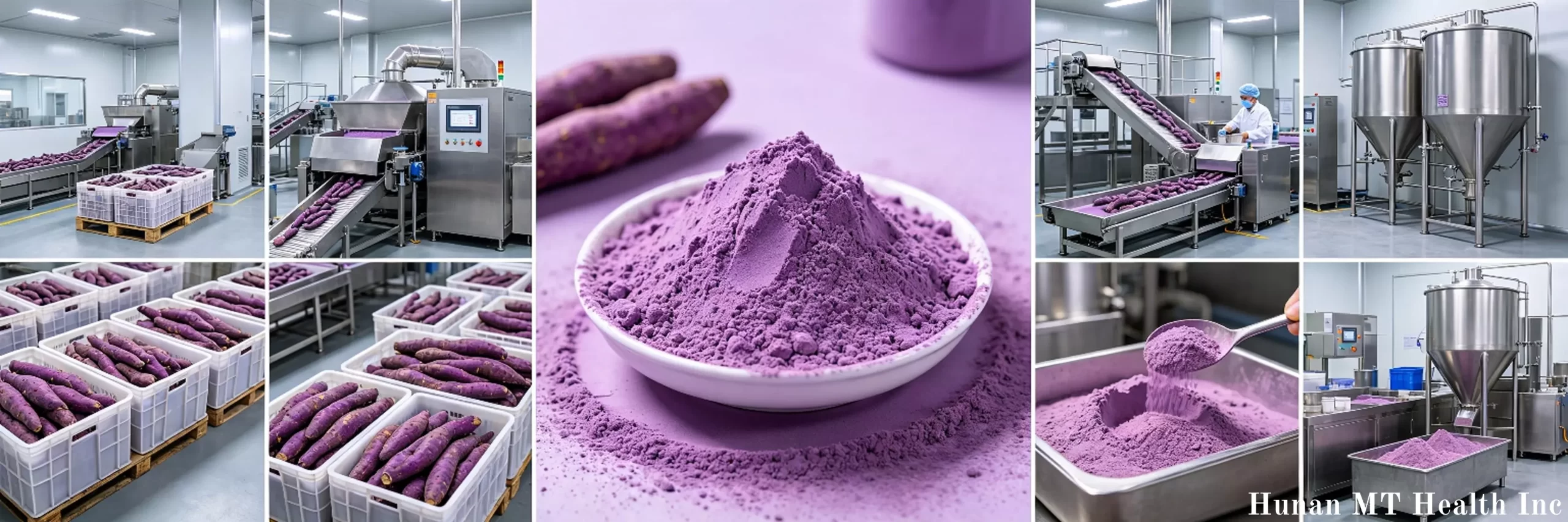
Hunan MT Health supplies Ube Powder for B2B food and beverage applications.
If you are developing an ube beverage, bubble tea, latte, ice cream, bakery product, dessert, snack, or instant food formulation, our team can discuss your requirements and provide relevant product information.
You can request:
Product specifications
Samples
COA
Technical information
Packaging options
Bulk quotation
The global ube trend is already moving beyond social media. The next opportunity is turning consumer curiosity about purple yam into products that are consistent, scalable and commercially relevant.
For food manufacturers looking to participate in that next stage, Ube Powder can be a practical starting point.
15874196392
No. A6-608 Lugu International Industrial Park, Yuelu District, Changsha 410205, Hunan, P.R China



 FR
FR  EN
EN  DE
DE  ES
ES  RU
RU  TH
TH  JA
JA  KO
KO  AR
AR  PT
PT  ZH
ZH