15874196392
No. A6-608 Lugu International Industrial Park, Yuelu District, Changsha 410205, Hunan, P.R China
The global instant beverage market continues to expand, with functional, clean-label milk tea mixes emerging as one of the fastest-growing categories. As consumers move away from high-sugar, artificially flavored instant drinks, beverage OEM brands are searching for natural ingredients that deliver vibrant color, unique flavor, and marketable health benefits. Ube powder, derived from purple yam, has quickly become a star ingredient for formulators creating premium instant milk tea blends.
For OEM manufacturers and private-label brands, ube powder offers a simple, versatile way to build eye-catching instant milk tea formulas that stand out on retail shelves. It brings a naturally sweet, nutty, vanilla-like flavor and a rich violet hue without artificial dyes. This article breaks down how to integrate ube powder into OEM instant milk tea recipes, key formulation considerations, quality checks for raw material sourcing, common product variations, and compliance tips for brands launching healthy ube milk tea lines.
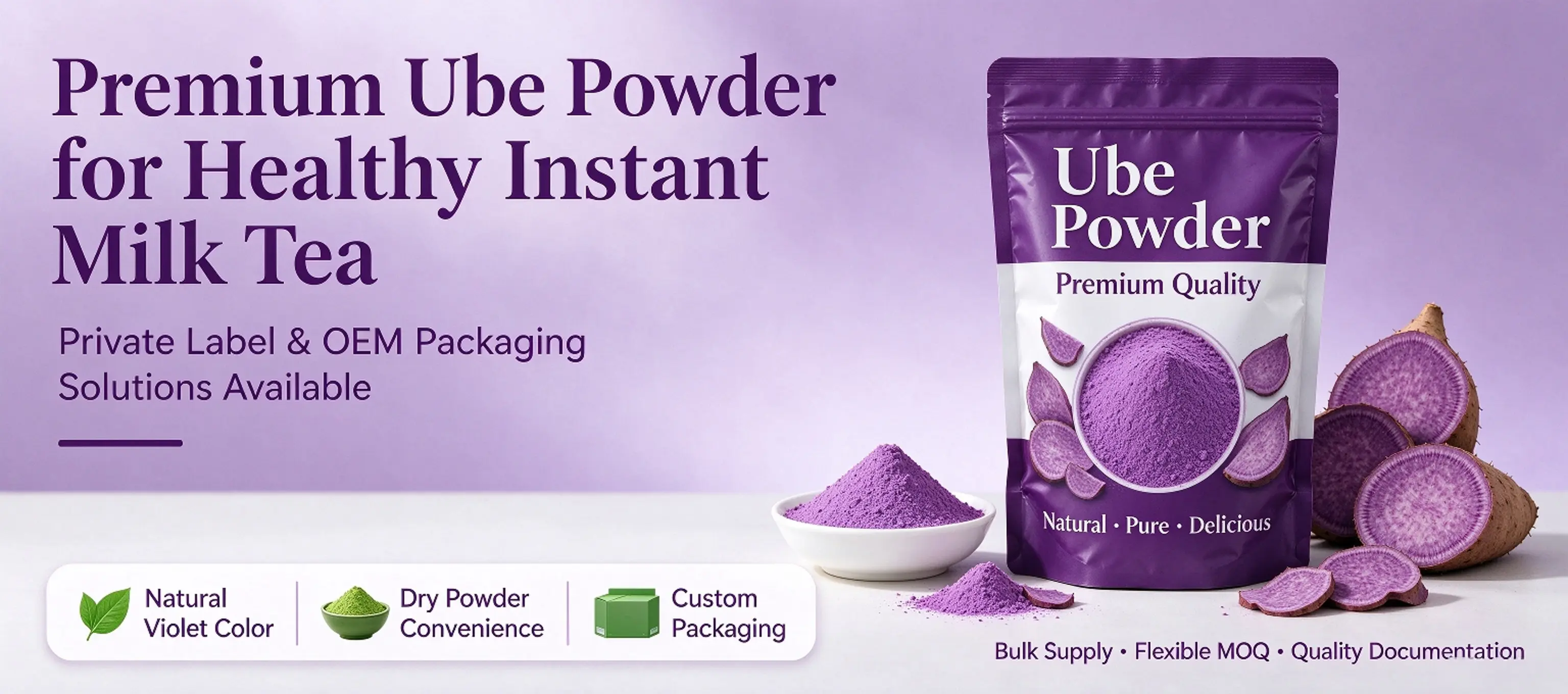
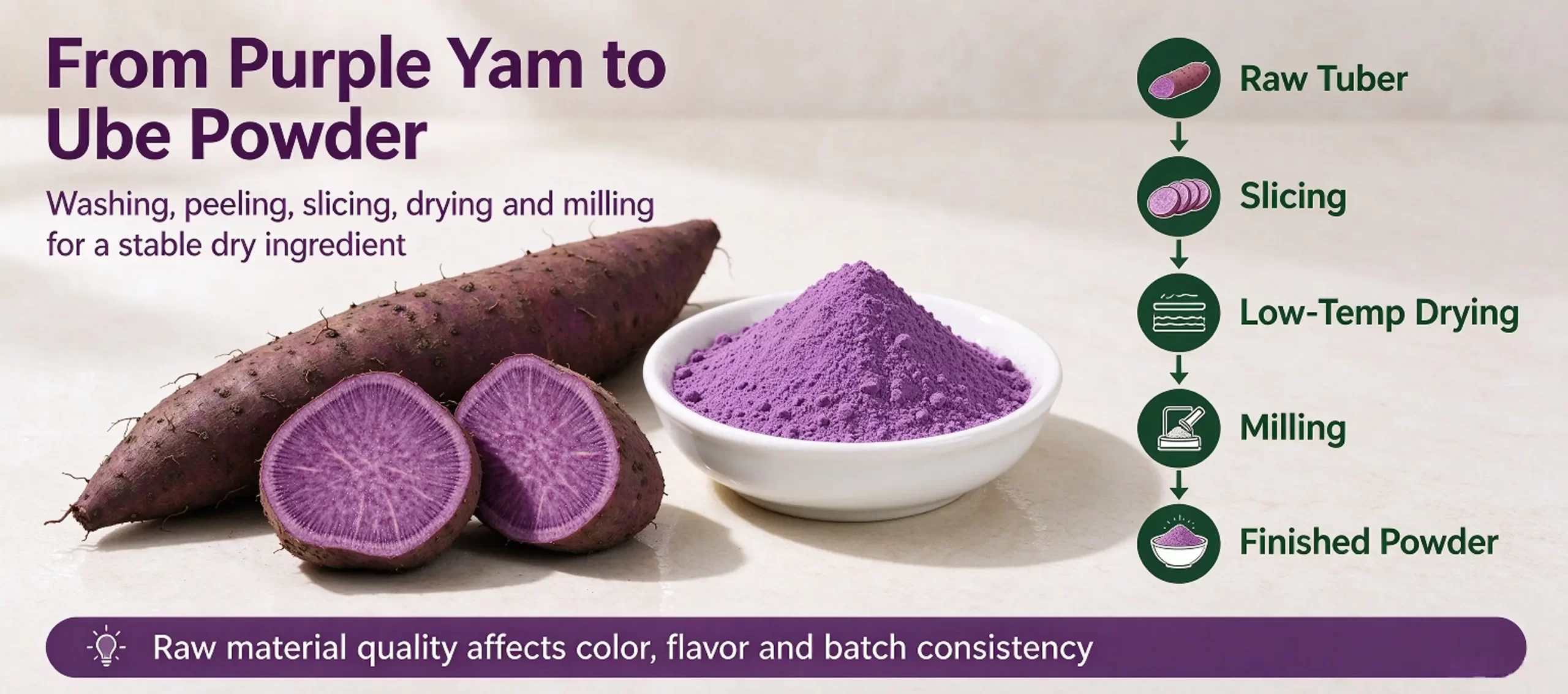
Ube powder is made from purple yam (Dioscorea alata), a starchy root vegetable widely popular in Southeast Asian cuisine. The tubers are washed, peeled, sliced, low-temperature dried, and milled into fine free-flowing powder. Unlike artificial colorants or synthetic flavorings, ube powder delivers both color and flavor from a single natural source, which is ideal for clean-label product positioning.
For OEM instant milk tea production, ube powder has multiple advantages. First, it is a dry powder ingredient, which fits perfectly within the manufacturing workflow of instant powder mixes. It blends easily with other dry components such as non-dairy creamer, milk powder, sweeteners, and tea extracts. No liquid concentrate handling is required, simplifying production, packaging, and long-term shelf stability.
Second, its signature deep purple color creates immediate visual appeal. In retail, drink mixes with distinctive purple color attract consumer attention, especially among buyers looking for trendy, Instagram-friendly functional beverages. Unlike anthocyanin colorants that can shift shade with pH changes, properly processed ube powder maintains a consistent violet tone in typical milk tea formulations.
Third, ube carries a familiar, comforting flavor profile: mild sweetness, subtle nutty notes, and a hint of vanilla. This flavor pairs beautifully with black tea, oolong, and green tea bases. It is not overpowering, so OEM formulators can adjust dosing to create either subtle ube-infused milk tea or bold, rich ube-forward blends.
Finally, ube powder contains natural antioxidants, which gives private-label brands a functional marketing angle. Brands can highlight natural plant origin, natural color, and no artificial additives, which strongly resonates with health-focused shoppers.
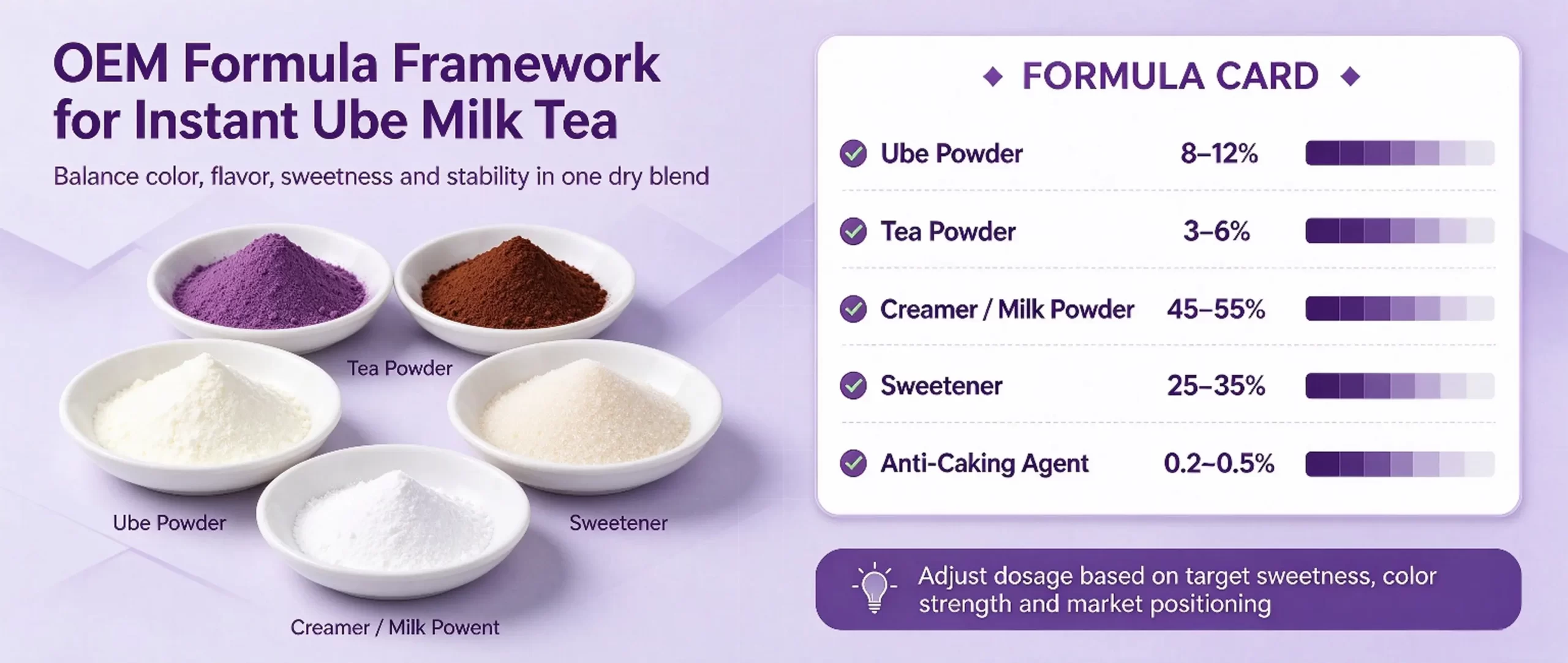
When developing OEM instant ube milk tea powder blends, manufacturers have two primary formula directions: full-flavor complete instant mixes (just add hot water) and base concentrates, where customers add milk or sweetener separately. Below are standard baseline formulations used in commercial OEM production.
This is the most popular private-label SKU for retail. The end consumer only adds hot water to make a cup of ube milk tea.
Ube powder: 8–12% (determines color strength and ube flavor intensity)
Non-dairy creamer / whole milk powder: 45–55%
Tea powder (black tea or oolong extract): 3–6%
Natural sweetener (cane sugar, erythritol, stevia blend): 25–35%
Anti-caking agent (food grade silicon dioxide): 0.2–0.5%
The percentage of ube powder is the critical variable. A lower inclusion rate (8%) delivers a light purple color and gentle ube background note, suitable for mass-market entry-level products. A higher inclusion rate (10–12%) creates a deep purple color and stronger ube taste, for premium, high-end product lines.
This base is sold to cafes, beverage brands, and co-packers who will add their own milk or sweetener.
Ube powder: 30–40%
Instant tea powder: 20%
Maltodextrin carrier: 35–48%
Anti-caking agent: 0.2–0.5%
This semi-finished base is popular for B2B customers, including bubble tea shops and beverage manufacturers. It gives buyers flexibility to customize sweetness and dairy components according to their brand positioning.
This formulation targets health-conscious consumers limiting added sugar.
Ube powder: 10–14%
Milk powder or plant-based creamer (oat or coconut): 50–60%
Instant tea powder: 4–7%
Natural zero-calorie sweetener (Reb M steviol glycosides): 1–3%
Anti-caking agent: 0.2–0.5%
This low-sugar version is a high-growth OEM option, as many customers want to reduce sugar intake while enjoying indulgent milk tea flavors. Ube’s natural sweetness helps reduce the amount of sweetener required in the formula.
While ube powder is highly versatile, formulators must address several common technical hurdles before mass OEM production. Ignoring these issues leads to batch inconsistency, poor end-user experience, and product returns.
Powder Caking and Flowability
Ube powder contains natural starch. If moisture control is poor during raw material production or blending, the finished instant mix can cake and clump inside pouches. OEM partners should verify the ube powder’s moisture specification, ideally below 6%. During blending, food-grade anti-caking agents are added in low dosages to maintain free-flow powder texture. Packaging must also use moisture-barrier laminated bags to prevent humidity absorption during storage and shipping.
Color Consistency Across Batches
Raw purple yam harvest season, growing region, and processing temperature will impact the color intensity of ube powder. For OEM brands selling consistent retail products, your supplier must provide batch-to-batch color testing. Request color value data with every COA. If color variation is too large, the final milk tea may look pale or dull in some production runs, hurting brand reputation.
Solubility and Sediment Control
Ube powder contains natural fiber and starch. If particle size is too coarse, undissolved sediment can sink to the bottom of the drink after mixing. For instant milk tea applications, select fine-mesh ube powder. OEM formulators should run small pilot mixing tests: prepare the drink with hot water, check dissolution speed, cloudiness, and sediment after 5 and 15 minutes. This test simulates the experience of end consumers.
Flavor Balance
Ube’s nutty, earthy flavor can clash with strong tea bases. Black tea pairs best with rich ube profiles. Green tea may overpower the delicate ube taste, requiring careful dosage adjustment. Run sensory panel tests to balance tea bitterness and ube sweetness before scaling up OEM production.
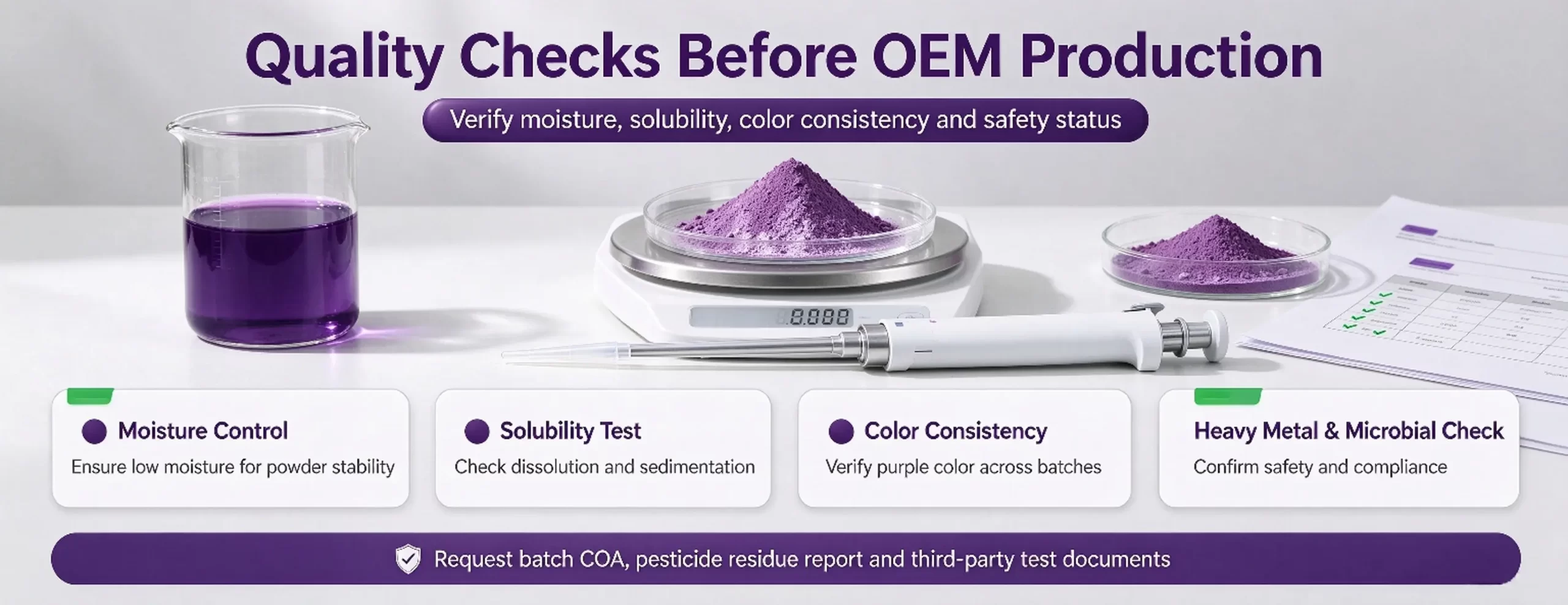
When sourcing bulk ube powder for private label milk tea OEM projects, brands must verify these quality documents and specifications from the ingredient supplier.
Product Specification Sheet: Confirm moisture, particle size, solubility, starch content, and color index.
COA (Certificate of Analysis) for each batch: Includes microbial test, heavy metal testing, and color measurement.
Pesticide residue report: Critical for shipments to North America, EU, and other regulated markets.
Food safety certificates: BRC, HACCP, Halal, Kosher, or organic certificates if required by your target market.
Sample testing: Always run bench trials with the exact ube powder batch before committing to large OEM orders.
Avoid purchasing low-grade ube powder that relies on added artificial purple color to boost hue. This breaks your clean-label marketing claims and may trigger regulatory non-compliance issues.
OEM clients have multiple packaging formats for instant ube milk tea powder:
Single-serve 20–30g stick sachets for on-the-go consumption (most popular retail format)
Multi-serve stand-up pouches (200g, 500g, 1kg) for home use
Bulk 25kg bags for foodservice and cafe customers
For branding, the rich purple color of ube milk tea is perfect for packaging visuals. Most private label brands highlight “Made with Natural Ube Powder”, “No Artificial Colors”, and “Instant Healthy Milk Tea” on the front of packaging.
Ube’s popularity started in Southeast Asia and the Philippines, but demand has exploded in North America, Australia, Europe, and the Middle East. Young consumers love unique, exotic flavors and visually striking purple food and beverage products.
The healthy instant milk tea segment is a strong niche. Traditional ready-to-drink bubble tea is high in sugar and preservatives. Instant powder OEM products allow brands to market low-sugar, clean-label, preservative-free alternatives. This fills a gap for consumers who want bubble tea flavor without high sugar and artificial additives.
Private label retailers, supplement brands, and beverage startups are the main buyers for OEM ube milk tea mixes. Many of these brands do not own manufacturing facilities, so they rely on co-packers who can source premium ube powder and develop custom formulas.
Ube powder is a powerful ingredient for OEM formulators developing healthy instant milk tea powder blends. It delivers natural violet color, unique nutty-vanilla flavor, and clean-label positioning, all in a dry powder form that fits seamlessly into instant beverage manufacturing.
Successful OEM projects start with formula design aligned to target market demands, whether that is all-in-one ready-to-drink mixes, cafe base concentrates, or low-sugar functional variations. Pay close attention to raw material quality, moisture control, solubility testing, and batch color consistency. Request full test documentation and always complete pilot trials before mass production.
For private label brands, ube instant milk tea is not just a trendy flavor. It is a marketable product that combines visual appeal, indulgent taste, and consumer demand for natural, healthier beverage options. By selecting high-quality ube powder and refining your OEM formula, you can create a competitive instant milk tea product that stands out in crowded retail markets.
15874196392
No. A6-608 Lugu International Industrial Park, Yuelu District, Changsha 410205, Hunan, P.R China



 DE
DE  EN
EN  FR
FR  ES
ES  RU
RU  TH
TH  JA
JA  KO
KO  AR
AR  PT
PT  ZH
ZH