15874196392
No. A6-608 Lugu International Industrial Park, Yuelu District, Changsha 410205, Hunan, P.R China

Taro has become one of the most recognizable flavors in the modern bubble tea market. But its appeal is no longer limited to bubble tea.
Today, taro-inspired drinks, desserts, bakery products, ice cream, smoothies, and café beverages are appearing across different markets. The flavor has moved from a relatively regional ingredient to a recognizable global food and beverage concept.
So, why are global consumers falling for taro flavor?
The answer is more interesting than simply saying that consumers like its purple color.
Taro combines a mild, creamy, starchy character with a subtle nutty sweetness. It works well with milk, coconut, tea, coffee, sugar, and dessert ingredients. At the same time, its soft purple appearance gives familiar products a completely different visual identity.
For food and beverage manufacturers, this combination creates an unusually flexible ingredient story: familiar enough to be approachable, but distinctive enough to feel new.

One of the biggest changes in the taro market is the way consumers perceive the ingredient.
Traditionally, taro was primarily recognized as a root crop used in regional cuisines. Today, “taro” can function almost like a standalone flavor category.
Consumers may order a taro latte without thinking about the botanical identity of the root.
They may choose taro ice cream because they already know what the flavor experience is expected to be.
They may recognize a pastel-purple taro milk tea immediately, even if they have never purchased fresh taro.
This transition—from raw ingredient to recognizable flavor identity—is important for product developers.
It means taro does not always need to be introduced through an educational story. In many markets, consumers are already beginning to understand what “taro flavor” represents.
Recent beverage trend research from Innova Market Insights describes taro as a flavor that was initially popularized by bubble tea but is now expanding into the wider global beverage market. The report highlights its natural sweetness and nutty undertone as characteristics that allow it to work with other flavors.
That creates room for taro to move beyond one beverage category.
A major reason for taro’s popularity is its relatively gentle sensory profile.
Taro is not typically dominated by an intense sourness, bitterness, or sharp acidity. Instead, cooked taro is associated with a mild, starchy, creamy and nutty character.
Food science research on taro flavor has identified multiple aroma notes, including caramellic, roasted, milky, sweet, nutty, vegetal and fruity characteristics.
This complexity is useful.
A strong flavor can sometimes dominate a formulation. Taro can instead act as a base flavor that gives a product identity while leaving room for complementary ingredients.
That is why taro works naturally with:
Coconut
Vanilla
Milk
Oat milk
Tea
Coffee
Brown sugar
Sesame
Chocolate
Caramel
Tapioca pearls
Fruit flavors
For product developers, this means one taro ingredient can potentially support several product concepts rather than only one finished product.
There is an interesting contradiction in today’s food market.
Consumers want something new—but they do not necessarily want something completely unfamiliar.
Taro fits this middle ground.
A taro latte is still a latte.
A taro milk tea is still a milk tea.
Taro ice cream is still ice cream.
Taro cake is still cake.
The familiar format reduces the barrier to trying a new flavor.
At the same time, taro provides something different enough to create curiosity.
This can be described as comforting novelty: a familiar product format combined with an unfamiliar or less conventional flavor.
For brands launching new products, this is commercially useful because innovation does not always require inventing an entirely new category.
Sometimes the easier route is to change the flavor.
It is difficult to discuss taro’s global popularity without discussing bubble tea.
The international expansion of bubble tea gave consumers in North America, Europe, the Middle East, Southeast Asia, and other regions repeated exposure to taro as a beverage flavor.
The result is important from a marketing perspective.
Consumers who first encountered taro in bubble tea can later recognize it in other categories.
The flavor can therefore travel from:
Bubble Tea → Café Drinks → Desserts → Bakery → Ice Cream → Retail Products
This is a different growth mechanism from a traditional ingredient that must build awareness separately in every category.
Current market research also points to strong growth expectations for taro within bubble tea. Grand View Research currently estimates that the taro flavor segment could grow at a 13.9% CAGR from 2026 to 2033.
While market forecasts should not be treated as guarantees, they illustrate the increasing commercial attention being given to taro as a flavor segment.
Flavor normally has to be tasted.
Taro is different because it can communicate its identity visually before the consumer takes the first sip.
The soft purple or lavender appearance associated with many taro beverages has become part of the flavor’s identity.
This is especially relevant in an environment where food discovery increasingly happens through photographs and short-form video.
A conventional milk tea may look familiar.
A pastel-purple taro milk tea immediately communicates:
different flavor + creamy beverage + visual novelty
This does not mean color alone creates demand.
The important point is that flavor and visual identity reinforce each other.
That gives taro an advantage in café menus, social media content, packaging, and product photography.
One of taro’s strongest commercial applications is the beverage sector.
The flavor naturally fits products with a creamy or milky base.
Examples include:
Taro Milk Tea
Probably the most recognizable commercial application.
Taro Latte
A natural extension of the specialty coffee and café beverage trend.
Taro Oat Latte
Combines a familiar plant-based beverage format with a more distinctive flavor.
Taro Smoothie
The creamy texture of smoothies provides a natural platform for taro.
Taro Shake
A dessert-style application where taro can work with vanilla, chocolate, coconut, or caramel.
Taro Coconut Drink
Coconut and taro provide complementary tropical and creamy flavor profiles.
This versatility is one reason taro is increasingly relevant to beverage manufacturers rather than only bubble tea shops.
Another reason consumers may enjoy taro is that the experience is not purely about aroma.
Taro contains substantial starch. Recent scientific reviews report that taro corms contain approximately 70–80% starch on a dry basis, while also containing dietary fiber, mucilage and other components.
This starch-rich composition helps explain why taro-based foods are often associated with a substantial, creamy or smooth eating experience.
For product developers, this means taro can contribute to the overall sensory architecture of a product.
The consumer is not simply experiencing:
“What does this taste like?”
They are also experiencing:
“How does this product feel?”
That distinction matters particularly in beverages and desserts.
Taro has another useful characteristic: it can be positioned in both indulgent and everyday formats.
A taro milkshake can be positioned as a dessert beverage.
A taro latte can become a daily café drink.
Taro yogurt can fit into a refrigerated food category.
Taro powder can become part of an instant beverage mix.
Taro flour can be incorporated into bakery products.
Recent research reviews describe taro flour and starch as materials with broad food applications, including cakes, biscuits, snacks, processed foods, and formulations where starch functionality is important.
This gives manufacturers considerable room for experimentation.
For commercial manufacturers, there is a significant difference between selling fresh taro and developing a taro-flavored product at scale.
Fresh roots have obvious limitations in terms of storage, transportation, preparation, batch consistency, and processing.
Powdered ingredients can simplify formulation and manufacturing.
Depending on the specification and processing method, taro powder can be incorporated into dry mixes, beverage bases, bakery formulations, desserts, and other food products.
For B2B buyers, the more important question is not simply:
“Is taro popular?”
It is:
“Can I consistently reproduce the product experience consumers expect from taro?”
That requires attention to:
Raw material identity
Flavor profile
Color
Powder particle characteristics
Moisture
Microbiological specifications
Dispersion behavior
Processing conditions
Packaging
Batch consistency
A trend becomes commercially meaningful when the ingredient can be translated into a repeatable formulation.
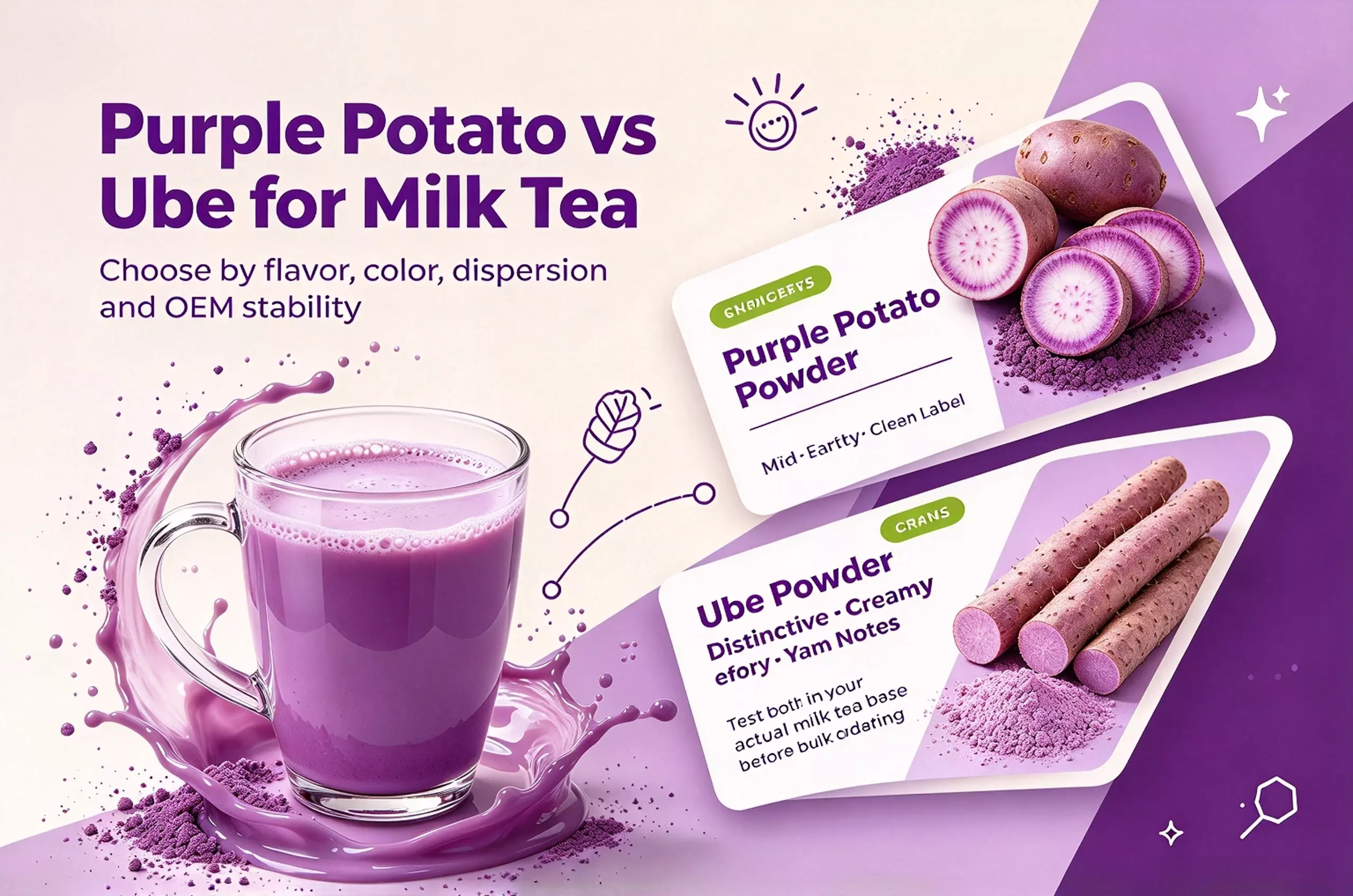
Taro and ube are frequently confused because both are associated with purple-colored foods.
They are, however, different botanical ingredients.
Taro is Colocasia esculenta.
Ube is Dioscorea alata, a species of yam strongly associated with Filipino cuisine.
Their sensory profiles are also different.
Taro is generally associated with a mild, starchy, creamy and nutty character.
Ube is often described as sweeter, nutty and earthy, with a distinctive dessert-oriented flavor profile.
For manufacturers, this difference creates an opportunity rather than a problem.
Taro can build a creamy beverage identity.
Ube can create a more distinctive dessert and specialty flavor identity.
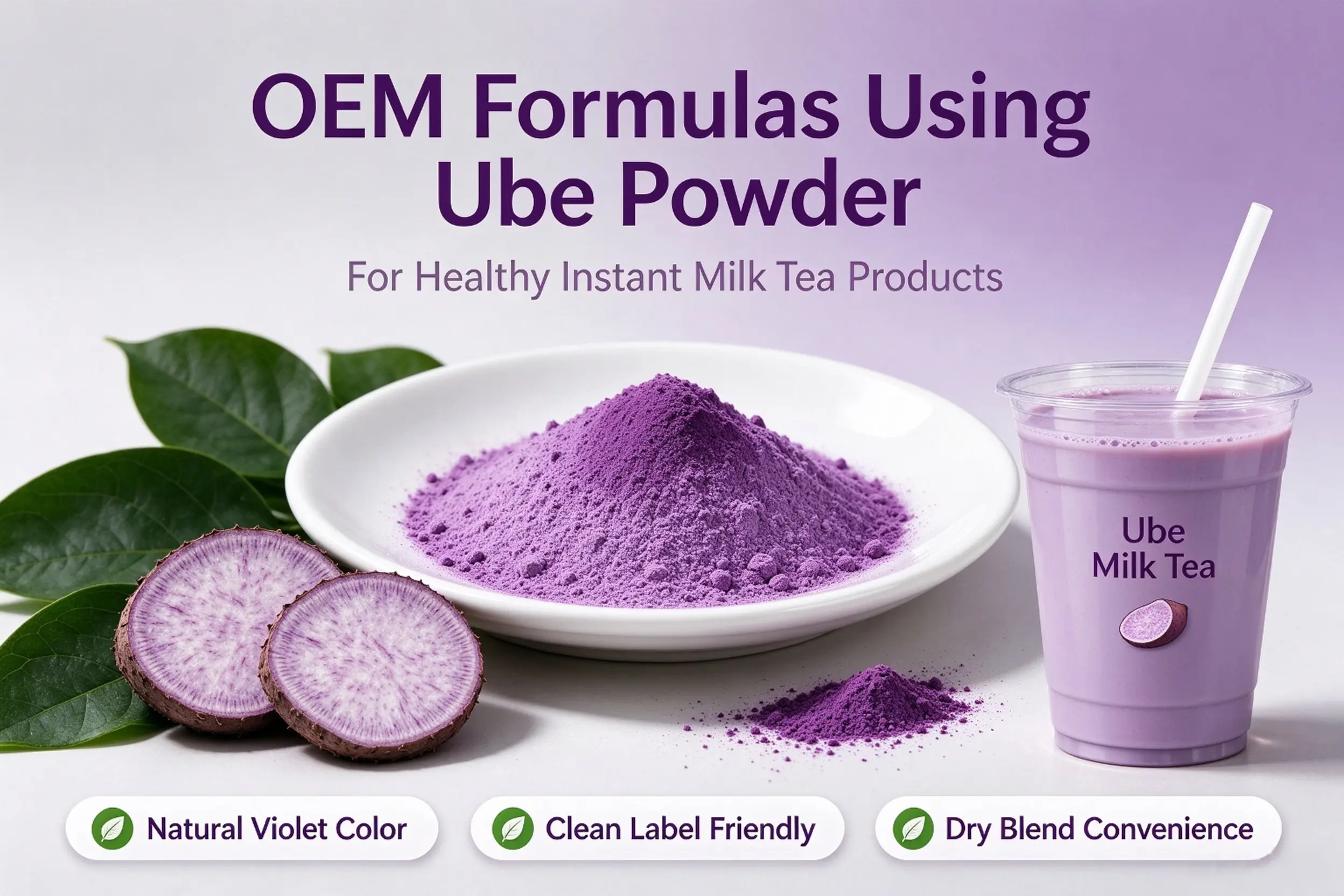
At Hunan MT Health, Ube Powder is one of our key products for food and beverage development, including applications such as specialty drinks, bakery products, ice cream and desserts.
Rather than treating taro and ube as interchangeable purple ingredients, product developers can use their different flavor characteristics to create separate product concepts.
Purple sweet potato provides another route into purple food development.
Unlike taro and ube, purple sweet potato belongs to Ipomoea batatas.
Its characteristic purple color is associated with anthocyanin pigments.
For manufacturers, this makes purple sweet potato particularly interesting when color is part of the product concept.
However, natural pigments are formulation-dependent.
Anthocyanin color can respond to factors such as pH and temperature, meaning that manufacturers should evaluate the ingredient under the actual processing and storage conditions of the finished product rather than assuming that one color specification will behave identically in every formulation.
This makes Purple Sweet Potato Powder another useful option in the Hunan MT Health portfolio for beverages, bakery products, desserts, smoothies, and other food applications.
The three ingredients can therefore serve different roles:
Taro — creamy flavor and beverage identity
Ube — distinctive specialty flavor and dessert appeal
Purple Sweet Potato — characteristic purple color and plant-based ingredient story
A successful taro product is not necessarily the product with the strongest purple color.
This is an important distinction for manufacturers.
Consumers ultimately experience several elements at once:
Flavor
Does the product actually deliver a recognizable taro profile?
Aroma
Does the aroma support the expected sensory experience?
Texture
Does the formulation feel creamy, smooth, or appropriately substantial?
Appearance
Does the visual presentation match the product concept?
Formulation Stability
Does the ingredient perform consistently during processing and storage?
Consumer Familiarity
Can consumers understand the product quickly from its name and appearance?
This is why ingredient selection should be application-driven.
A powder developed for a beverage may need different specifications from one intended for bakery applications.
The next stage of taro innovation may come from taking the flavor into familiar categories.
Here are several concepts that manufacturers can explore:
1. Taro Oat Latte
Combines the growing popularity of oat-based beverages with the established taro flavor profile.
2. Taro Coconut Smoothie
Uses two naturally complementary flavor directions to create a tropical beverage.
3. Taro Soft-Serve
A simple way to introduce taro into the increasingly popular specialty dessert category.
4. Taro Bakery Mix
Taro powder can be explored in cakes, cookies, waffles, and other baked products.
5. Taro Instant Beverage Powder
A convenient format for foodservice, cafés, vending, retail beverage mixes, and food manufacturing.
The common principle is simple:
Do not make the product complicated. Make the familiar product more interesting with taro.
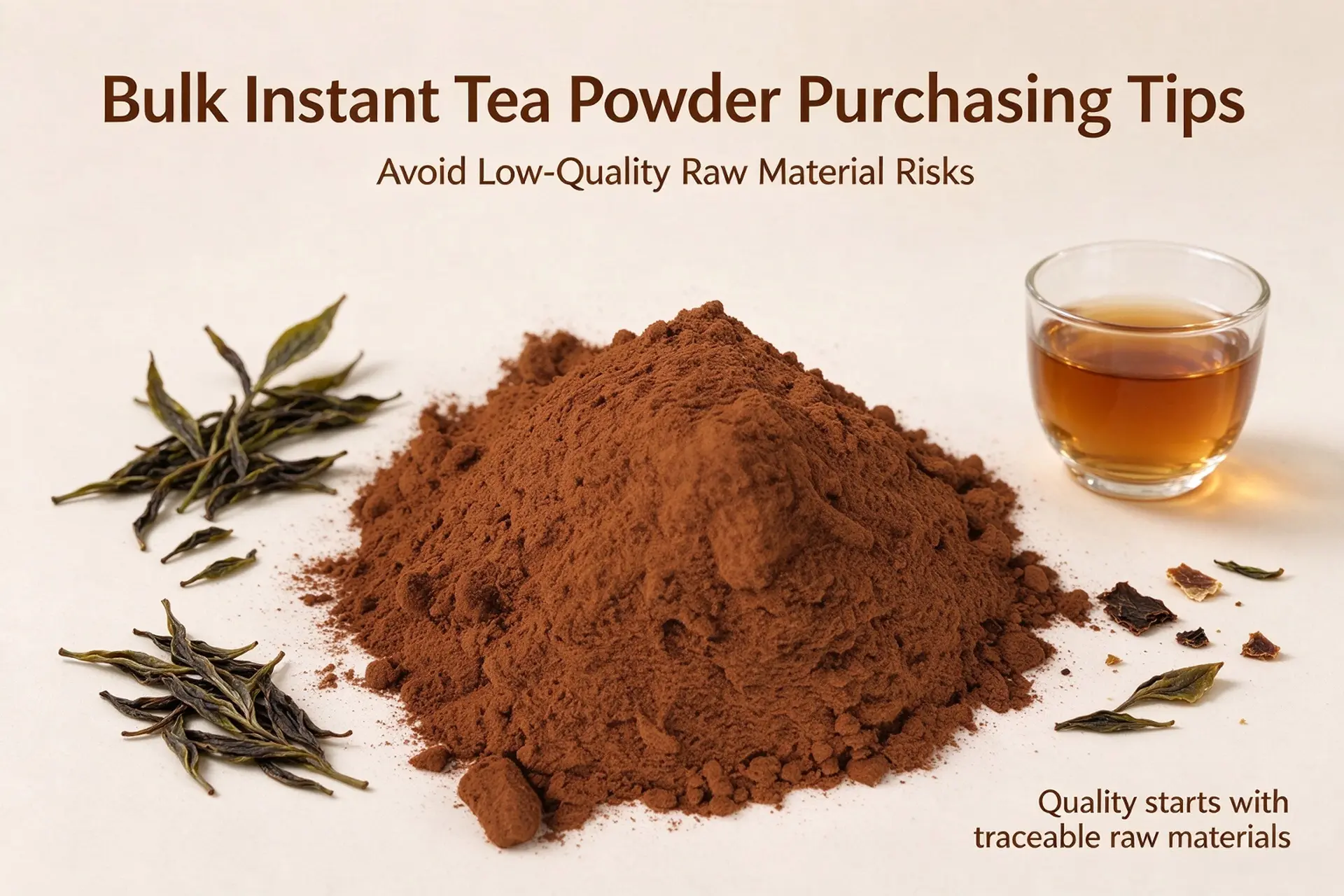
Before purchasing taro powder for commercial production, buyers should look beyond the product name.
A professional supplier should be able to provide information relevant to the intended application.
Important questions include:
What is the botanical source?
Confirm that the ingredient is actually derived from the intended taro material.
What processing method is used?
Processing can influence flavor, color, moisture, and powder characteristics.
What are the typical specifications?
Ask for the relevant product specification and batch COA.
How consistent is the product between batches?
Consistency is critical when a flavor becomes a signature menu item.
How does the powder perform in the intended formulation?
Application testing is more meaningful than relying on a specification sheet alone.
What packaging and MOQ options are available?
These factors become important when moving from product trials to commercial production.
At Hunan MT Health, these are also the practical considerations we focus on when working with B2B customers developing botanical and plant-based food ingredients.
Many food trends disappear because consumers are interested in the novelty but not the underlying flavor.
Taro has a stronger foundation.
It has:
A long culinary history
Existing consumer recognition
A distinctive but approachable flavor
Strong compatibility with creamy beverages
A recognizable visual identity
Multiple food applications
A connection to the global bubble tea category
Most importantly, consumers do not need to learn how to consume taro.
They already understand the formats.
The opportunity is simply to introduce the flavor into more of them.
That is a much more sustainable path for ingredient innovation than relying entirely on novelty.
The real commercial opportunity may not be “selling more taro milk tea.”
It may be turning taro into a flavor platform.
Once consumers recognize taro, manufacturers can experiment with new combinations:
Taro + Coconut
Taro + Vanilla
Taro + Coffee
Taro + Oat
Taro + Brown Sugar
Taro + Chocolate
Taro + Sesame
This creates an almost modular approach to product development.
The core flavor remains recognizable while the surrounding ingredients change.
That is how a regional ingredient can evolve into a global flavor category.
At Hunan MT Health, we focus on supplying plant-based ingredients that can support practical food and beverage innovation.
Our portfolio includes Taro Powder, Ube Powder, and Purple Sweet Potato Powder, giving manufacturers several options for developing distinctive purple-themed products.
The goal is not to treat these ingredients as identical.
Instead, each can be selected according to the desired flavor, appearance, application, and formulation requirements.
For B2B buyers, we can support product development discussions around specifications, samples, packaging, MOQ, and application requirements.
If you are developing a new taro beverage, dessert, bakery product, instant mix, or another specialty food concept, selecting the right ingredient specification at the beginning can make later scale-up much easier.
Global consumers are not falling for taro simply because it is purple.
They are responding to a combination of flavor, texture, familiarity, visual identity, and cultural influence.
Bubble tea introduced taro to millions of consumers outside its traditional markets. Café culture is now helping the flavor move into lattes, smoothies, and specialty beverages. Food manufacturers are exploring taro in bakery, desserts, snacks, and instant formulations.
That evolution is important.
A temporary food trend depends on novelty.
A successful flavor category depends on repeatability and versatility.
Taro has both.
And as manufacturers continue looking for flavors that feel new without being difficult to understand, taro has a strong position: it is unusual enough to attract attention, but familiar enough to become a repeat purchase.
For the next generation of food and beverage products, that may be taro’s biggest advantage.
What does taro flavor taste like?
Taro is commonly associated with a mild, creamy, starchy and nutty flavor. Food science research has identified caramellic, roasted, milky, sweet and nutty aroma notes among the characteristics associated with cooked taro.
Why is taro flavor so popular in bubble tea?
Taro combines a distinctive flavor with a creamy beverage format and recognizable purple appearance. Its mild profile also pairs well with milk, tea, coconut, vanilla, brown sugar and other common beverage ingredients.
Is taro the same as ube?
No. Taro is Colocasia esculenta, while ube is Dioscorea alata. They have different botanical identities and different sensory profiles.
Is taro naturally purple?
Not necessarily. Taro varieties can differ in appearance, and many taro roots are white or cream-colored with purple or lavender areas. The color of a finished taro beverage also depends on the raw material, processing and formulation.
What can taro powder be used for?
Taro powder can be explored in milk tea, lattes, smoothies, instant beverage mixes, ice cream, cakes, cookies, waffles, desserts and other food applications. Recent reviews also document broad industrial applications for taro-derived flours and starches.
Is taro a good flavor for new product development?
Its relatively mild flavor, compatibility with creamy and sweet formulations, strong association with bubble tea, and recognizable visual identity make taro an interesting option for new beverage and dessert development.
Why are food manufacturers interested in taro powder?
Powdered taro ingredients can be easier to incorporate into standardized commercial formulations than fresh roots. Buyers can evaluate specifications, processing characteristics, packaging and batch consistency according to their intended application.



15874196392
No. A6-608 Lugu International Industrial Park, Yuelu District, Changsha 410205, Hunan, P.R China



 EN
EN  FR
FR  DE
DE  ES
ES  RU
RU  TH
TH  JA
JA  KO
KO  AR
AR  PT
PT  ZH
ZH